
Table of Contents
- Why Spotting Cheap Bohemian Fabric Matters
- How to Identify Fabric Types in Bohemian Pieces
- Signs of Low-Quality Fabric to Reject
- How to Check Fabric Quality When Shopping Online
- Fabrics to Avoid for Clothing Quality
- Price Comparison: Spotting Unrealistic Deals
- Your Checklist for Evaluating Cheap Bohemian Fabric
- Frequently Asked Questions
Last Updated: October 21, 2026
Why Spotting Cheap Bohemian Fabric Matters
Bold prints, rich colors, and natural textures create the bohemian vibe you're after, but when you fail to spot cheap bohemian fabric, it can destroy the whole look within weeks.
Learning how to spot cheap bohemian fabric before you buy saves money, frustration, and closet space.
Cheap fabric shows up in three ways: low-quality fibers that don't hold up, poor construction with loose weaves or thin weight, and bad printing or dyeing that bleeds and fades fast. You can learn to identify all three in minutes.
This guide shows what to look for in person or online: reading fiber labels, spotting construction red flags, and comparing prices fairly.
How to Identify Fabric Types in Bohemian Pieces
Reading Fiber Content Labels
The fiber content label is your first defense against cheap bohemian fabric, telling you what it's made of and how it will feel, wear, and age.
Look for labels that list percentages, like "100% cotton" or "65% linen, 35% cotton." Vague terms like "cotton blend" or "natural fibers" without percentages are a red flag, since manufacturers hide cheap synthetics in vague language.
The order matters too: fibers are listed highest to lowest percentage. If polyester is first or second, the fabric is mostly synthetic, even if the label mentions natural fibers. Natural fibers breathe better, age beautifully, and feel better against skin.
Check care instructions too. If a label says "100% cotton" but requires dry cleaning, something's off; complex care instructions often signal poor construction.
Common Bohemian Fabric Blends and What They Mean
Knowing common bohemian blends helps you spot when manufacturers cut corners.
Cotton-dominant blends (70% cotton or higher) are standard for bohemian clothing. Cotton is breathable, holds dye well, and gets softer with washing.
Linen blends (50% linen minimum) create the textured, slightly wrinkled look bohemian style celebrates. Pure linen wrinkles heavily, so a 60% linen, 40% cotton blend is ideal. Watch labels claiming linen below 40%: you're paying for the look, not the feel.
Rayon and viscose are semi-synthetic fibers made from wood pulp. They drape beautifully but are weaker when wet and prone to pilling. Rayon above 50% is risky unless the other fibers are strong; a 40% rayon, 60% cotton blend works.
Polyester blends under 20% are fine as reinforcement. Above that, you're buying a synthetic fabric with a bohemian print, not bohemian fabric. Polyester doesn't breathe, pills easily, and doesn't age well.
Signs of Low-Quality Fabric to Reject
Weave, Weight, and Drape Red Flags
Hold the fabric in your hands, or study product photos online; feel and appearance reveal construction quality instantly.
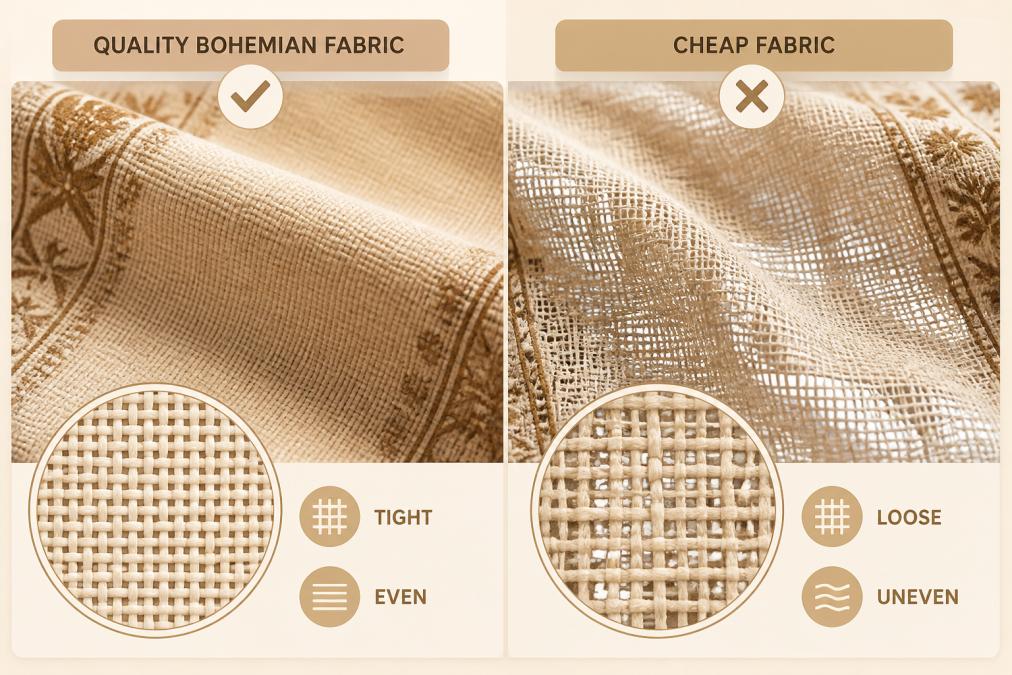
Loose weaves are the first sign of problems. If you can see light through the fabric when you hold it up, or the weave looks loose and uneven, it will stretch out of shape after a few wears.
Low weight is another warning. Bohemian fabrics should have substance; paper-thin or transparent pieces are cheap. Lightweight fabrics pill, tear, and fade faster because there's less material to protect the fibers.
Poor drape signals bad construction. Good bohemian fabric falls smoothly and hangs naturally; cheap fabric clings stiffly or bunches awkwardly.
Uneven texture is a red flag. Quality fabric feels consistent; smooth patches mixed with rough ones mean sloppy manufacturing and uneven wear.
Print Quality and Color Bleeding Issues
Bohemian style lives on bold prints and rich colors. Cheap fabric ruins this with fading, bleeding, and poor print quality.
Color bleeding happens when dyes aren't fixed properly. Rub a damp cloth on the fabric; if color comes off, it will bleed in the wash. Online, check reviews, since people mention bleeding immediately.
Fading shows up two ways: uneven fading across the print, signaling poor dye application, or rapid fading after a few washes. Quality bohemian fabric holds color through multiple wash cycles.
Print clarity matters for pattern quality. Sharp, crisp edges on floral and paisley prints mean careful application; blurry, bleeding edges mean cheap fabric or rushed printing. Large-scale prints show this most obviously, a blurry 6-inch paisley is immediately noticeable.
Uneven print coverage is common in cheap bohemian fabric. The print should be consistent across the entire piece; uneven coverage signals poor quality control.
How to Check Fabric Quality When Shopping Online
What to Look for in Product Photos and Descriptions
Online shopping makes spotting cheap bohemian fabric harder because you can't touch it, but product photos and descriptions reveal plenty.
Zoom in on product photos. Most retailers let you enlarge images. Use this. Look at the weave closely. Can you see individual fibers? Is the weave tight and even?
Check multiple angles. If the fabric clings to the model or bunches awkwardly in any photo, the drape is poor. Quality bohemian fabric looks smooth and natural from all angles.
Read the fiber content carefully. Manufacturers list it somewhere, usually near the size/fit information. Write down the exact percentages. If percentages aren't listed, that's a red flag.
Look for weight information.
Examine the print quality in photos. Zoom in on patterns. Floral and paisley prints should have sharp edges. If edges look blurry or colors blend into each other, the print quality is poor.
Using Customer Reviews to Spot Fabric Problems
Customer reviews are your hidden advantage online. Real people describe exactly what cheap bohemian fabric problems look like after purchase.
Look for repeated complaints. If multiple reviews mention the same issue, pilling, fading, color bleeding, loose seams, that's a pattern, not a one-off problem.
Read negative reviews first. Skip the five-star reviews and go straight to three-star and below, where people mention pilling, fading, seam issues, and fit problems.
Pay attention to wash-related complaints. Phrases like "faded after one wash," "color bled everywhere," "shrunk significantly," or "fell apart" tell you the fabric quality is poor.
Note comments about fit and feel. Reviewers describe how fabric feels against skin and how it drapes. Complaints about clinging, bunching, or stiffness signal poor drape.
Check the reviewer's other purchases. Someone who regularly buys from boutiques and high-end retailers has higher standards, so their complaints carry more weight.
Fabrics to Avoid for Clothing Quality
Synthetic Blends That Pill and Fade
Pilling, those little balls of fiber that form on fabric surfaces, is the most visible sign of cheap bohemian fabric.
High polyester content pills aggressively. Polyester fibers are weak and break easily with friction. Once broken, they ball up on the surface.
Low-quality acrylic also pills heavily. Acrylic is cheaper than polyester but weaker. Blends with acrylic above 20% will pill. Check labels carefully, sometimes acrylic is listed under generic terms like "synthetic fiber."
Cheap rayon blends pill because rayon fibers are delicate. A 40% rayon, 60% cotton blend works; a 40% rayon, 30% polyester, 30% acrylic blend will pill constantly.
Nylon and spandex in high percentages cause problems too. Spandex above 5% makes fabric clingy and prone to pilling.
The fix is simple: stick to natural-fiber dominant blends. 70% cotton or higher. 50% linen or higher. These fabrics pill minimally and age beautifully.
Low-Weight and Loosely Woven Options
Fabric weight determines durability. Cheap bohemian fabric is often too light because it's cheaper to produce.
Ultra-lightweight fabrics under 3.5 ounces per yard are risky for clothing: transparent, tear easily, and show wear immediately. These weights work for scarves or wraps, not pieces you'll wash regularly.
Loosely woven fabrics with visible gaps between fibers lack durability. They stretch out of shape, pill easily, and wear through faster.
Thin fabrics with heavy prints are a bad combination. The weight of the print pulls on weak fibers. Seams separate, and the fabric stretches unevenly. A quality piece has substantial fabric underneath the print to support it.
Sheer or semi-transparent fabrics aren't inherently cheap, but they're often used to hide poor fiber quality. If you can see light through a piece that shouldn't be sheer, the weave is too loose.
Price Comparison: Spotting Unrealistic Deals
Bohemian fashion doesn't have to be expensive, but unrealistically cheap prices signal cheap fabric.
Know the baseline. Quality bohemian pieces with natural-fiber dominant blends and good construction often reflect their value. Pieces with claims of quality natural fibers that are priced unusually low are almost always cheap bohemian fabric.
Compare across retailers. The same or similar pieces priced very differently tell a story.
Watch for constant sales. Retailers that always run deep discounts are often clearing cheap inventory. Combined with other red flags, constant discounting suggests cheap bohemian fabric.
Understand shipping costs. Sometimes cheap prices hide in shipping. A $20 piece with $15 shipping isn't actually cheaper than a $30 piece with free shipping. Calculate the total cost before deciding based on price alone.
Compare price to fiber content. A $40 piece that's 100% linen beats a $35 piece that's 60% polyester.
Your Checklist for Evaluating Cheap Bohemian Fabric
Use this checklist before buying any bohemian piece. It takes two minutes and saves you from cheap fabric mistakes.
Fiber Content:
- Label lists exact percentages (not vague terms like "blend")
- Natural fibers are 70% or higher
- Polyester is below 20%
- No acrylic or nylon in the blend
Construction:
- Weave is tight and even (no visible gaps)
- Fabric has weight and substance (not paper-thin)
- Drape is smooth and natural (not clingy or stiff)
- Texture is consistent across entire piece
Print and Color:
- Print edges are sharp and crisp
- Colors are even across the pattern
- No color bleeding when tested with damp cloth
- No uneven fading or discoloration
Online Shopping Only:
- Product photos show fabric from multiple angles
- Zoom-in photos show tight weave clearly
- Negative reviews don't mention pilling or fading
- Fiber percentages are listed clearly
- Weight information is available
Price:
- Price is realistic for fiber content (not suspiciously cheap)
- Total cost includes shipping
- Price aligns with quality signals you've verified
- You've compared to similar pieces at other retailers
Check off every item before buying. If you skip items because information isn't available, that's a red flag. Quality retailers provide this information because they have nothing to hide.
Spotting cheap bohemian fabric protects your wardrobe and your budget. When you know what to look for, tight weaves, natural-fiber dominance, sharp prints, and realistic pricing, you avoid pieces that fade, pill, or fall apart. At Owl Meets Flamingo Boho Boutique, we source pieces that pass every check on this list because we know bohemian fashion should feel as good as it looks. Our curated collection focuses on fabrics that age beautifully and hold their color through regular wear.
Frequently Asked Questions
How can you identify the type of fabric used in bohemian clothing?
Check the care label sewn into the garment, it lists fiber content by percentage. Look for natural fibers like cotton, linen, or hemp, or blends that contain at least 50% natural material. Online listings should display fiber content in the product description. If no label is visible or the description is vague, contact the seller. Genuine bohemian pieces typically prioritize breathable, natural-fiber fabrics that feel soft and drape well.
What are the main signs of low-quality bohemian fabric?
Watch for loose, uneven weaves, thin fabric weight that feels flimsy, and pilling after minimal wear. Check if prints fade or bleed in photos or customer reviews. Seams that look fraying or unfinished, and synthetic-heavy blends (polyester over 70%) are red flags. High-quality bohemian fabric feels substantial, holds its color, and maintains its shape after washing. If a piece feels papery or sounds stiff, it's likely cheap.
How can you check fabric quality when shopping online?
Examine product photos closely for weave definition and color saturation. Read customer reviews specifically mentioning durability, fading, or pilling. Ask the seller for fiber-content percentages if not listed. Request close-up photos of seams and hems. Check care instructions, quality pieces often recommend gentle washing rather than machine wash. Compare prices fairly: if a bohemian piece costs significantly less than similar retailers, the fabric is likely compromised.
What fabrics should you stay away from when buying bohemian clothing?
Avoid low-weight polyester (feels thin and plastic-like), low-count cotton blends under 50% natural fiber, and heavily processed rayon without quality verification. Steer clear of pieces with vague fiber labels or those claiming to be 'bohemian' without specifying materials. Loosely woven fabrics prone to snagging and low-quality silk-like synthetics that don't breathe are common cheap substitutes. Natural-fiber fabrics, even if pricier upfront, outlast synthetic-heavy options and maintain their aesthetic appeal.
0 comments